
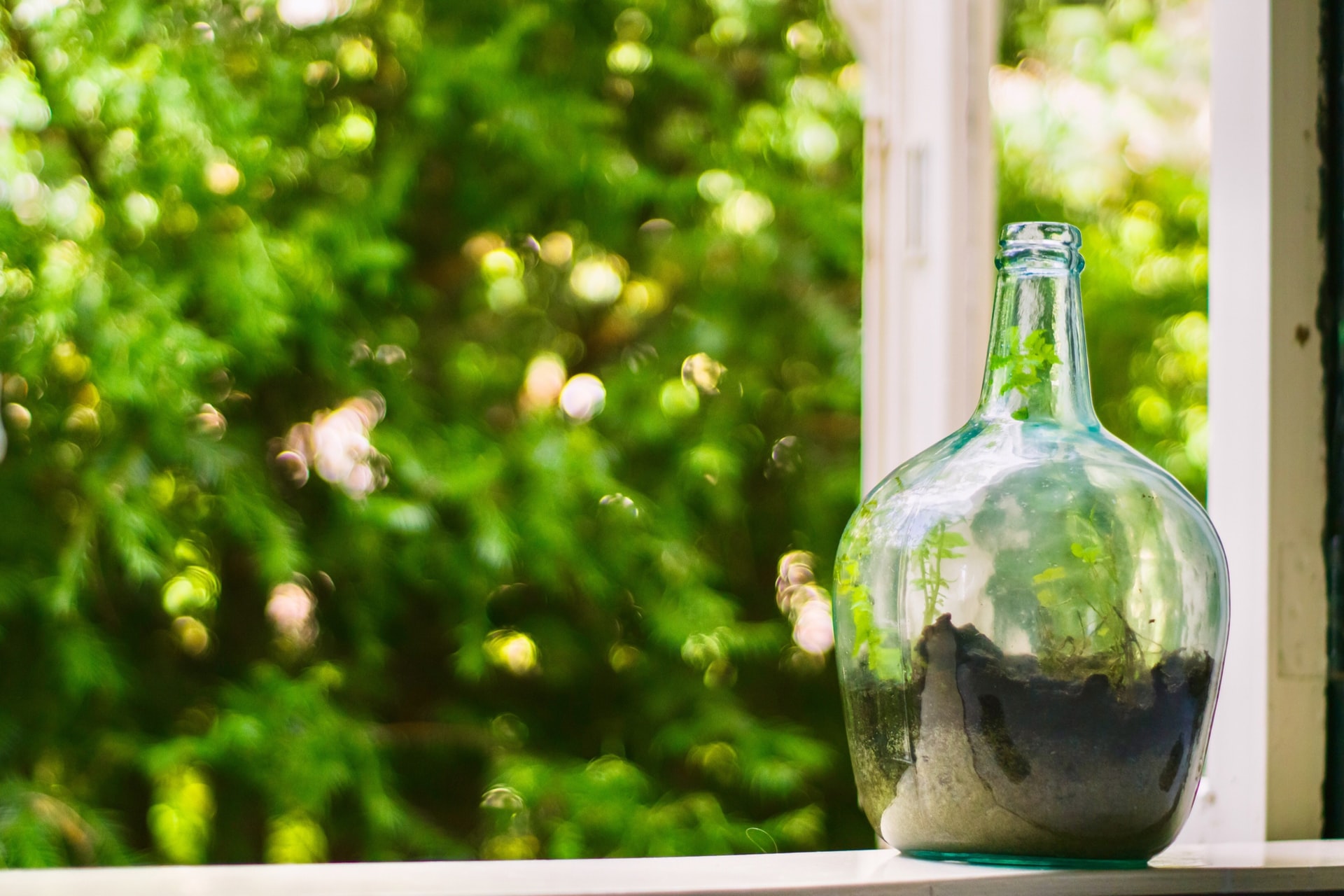
You bought a beautiful terrarium, now what? To ensure the health and longevity of your terrarium, it’s important to manage its exposure to sunlight and water carefully:
Sunlight
– Avoid placing your terrarium in direct sunlight as it can lead to overheating due to the greenhouse effect, potentially harming the plants. This is the number one cause of death of terrariums so be careful where you place it!
– Find a location that receives indirect natural light, such as near a north-facing or east-facing window or in a room with a skylight but not where the sun rays shine directly on it.
– For more control over lighting, consider purchasing an LED grow light with a timer to simulate a natural day/night cycle (12 hours on, 12 hours off), which we offer in our Shop.
Watering
If your terrarium is not airtight or is an open terrarium, it will need watering every week or every other week, depending on its placement and environment. Examine your terrarium carefully to check for any openings. Purchasing a moisture meter can take the guesswork out of watering and help keep your terrarium healthy. We sell moisture meters in our shop that are tested and proven to work well.
Always use rainwater, distilled water, or bottled water when watering your terrarium.
Always use a spray bottle when watering your terrarium. Use a steady stream and aim toward the base of the plant so the water can seep down into the roots.
Never use a cup or place the terrarium under a running tap, as this can cause excessive moisture to collect in the drainage layer and disrupt your miniature ecosystem.
If your terrarium is properly sealed, it should rarely need watered, as it creates its own self-sustaining ecosystem. To ensure everything is functioning properly, use a moisture meter to monitor conditions. If the terrarium appears too dry or too damp, it may need adjusted to a location with more appropriate lighting.
Moisture Management (For closed terrariums)
– Observe the glass for condensation; some condensation is normal, typically appearing twice daily (morning and evening).
– If condensation persists continuously, it indicates excess moisture. Open the terrarium to allow it to dry for a day or two, repeating as needed until condensation is observed only in the morning and evening.
Soil Moisture
– The ideal soil moisture should resemble that of a wrung-out damp sponge.
– Use a moisture meter to test if the soil near the roots is damp or dry. The meter should read “moist” not “wet”. A “wet” reading could lead to fungus or mold causing problems such as fungus gnats. Open the lid for a day or two if your moisture level is reading wet.